Your Ring setup may qualify for a home-insurance discount, but a video doorbell alone does not establish eligibility. Ask your insurer which monitored systems and documentation it accepts, then compare those requirements with your equipment and active service. Get the actual annual dollar saving before upgrading a plan specifically for the discount.

The useful outcome is a confirmed change to your own policy. A percentage in an advertisement, a neighbor's discount, or a certificate available in an app does not by itself tell you what your insurer will deduct.
Identify what your system actually does
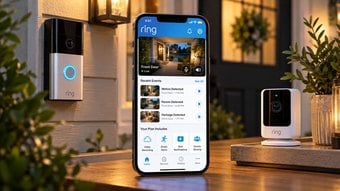
Start with the equipment at the insured address. A doorbell that records visitors, an alarm that you monitor yourself, and an alarm enrolled in professional monitoring provide different services. An insurer may distinguish among them.
Ring's certificate guidance says eligible account owners can request a certificate for qualifying Ring Alarm professional monitoring or compatible smoke and carbon-monoxide monitoring. Eligibility depends on the equipment and active subscription. Treat that as documentation of a service, not a promise that every insurance company offers a discount.
| Your setup | What to ask the insurer | What to verify with Ring |
|---|---|---|
| Doorbell or camera only | Does this type of device qualify for any relevant credit? | The actual device and subscription benefits |
| Self-monitored alarm | Is self-monitoring accepted? | Current monitoring status |
| Professionally monitored compatible alarm | Which certificate and coverage requirements apply? | Enrollment, account owner, and protected address |
| Compatible monitored smoke or CO equipment | Is there a separate fire or smoke-related credit? | Eligible devices and active monitoring service |
Write down the system's components rather than relying on a broad phrase such as “I have Ring.” That makes it easier for the insurer to answer the right question.
Ask for the discount in dollars
Contact your insurer or agent through the contact information on your policy. Explain the equipment, address, and monitoring service. Ask whether the policy qualifies, what evidence is required, and when an approved change would take effect.
If the answer is a percentage, ask what part of the premium it applies to. A discount on one eligible portion of a policy is not necessarily the same percentage off the entire bill. Other discounts, minimum premiums, or underwriting rules may also affect the final amount.
Request a revised quote or written annual dollar estimate using your current coverage. Keep deductibles and coverage limits the same for the comparison. A lower premium achieved by reducing coverage is not an alarm-system saving.
Gather the certificate and check its details
Ring's current app instructions direct the account owner to Menu, Settings, Monitoring, and Insurance Certificate, then Send Certificate. The certificate is sent by email. Its website also offers a certificate request through the monitoring settings.
Confirm that the name, protected address, service, and relevant dates match the insurer's requirements. If something is wrong, resolve it through Ring before submitting it as proof. A certificate for a previous residence should not be used to claim monitoring at a new one.
If the certificate option is unavailable, check the account owner and monitoring eligibility. Buying a camera plan alone does not establish that the account has qualifying professional monitoring.
Calculate the incremental cost
The right comparison depends on what you would pay without the insurance incentive. If you already want and maintain qualifying monitoring, a confirmed discount may be an additional benefit. If you would upgrade solely to obtain it, compare the extra cost with the extra saving.
Here is a hypothetical example. Your current service costs $100 per year. Qualifying monitoring would cost $200 per year, and the insurer confirms a $70 annual premium reduction. The incremental service cost is $100, so you would spend $30 more per year after the discount.
That result does not mean monitoring is a bad purchase. It means the discount does not fully fund the upgrade. Decide whether the service itself is worth the remaining cost.
If instead the confirmed saving were $140, the same upgrade would leave a $40 annual benefit before any additional equipment, tax, permit, or other costs. Add those items where applicable. A first-year hardware purchase can outweigh a modest recurring saving.
| Hypothetical annual comparison | Case A | Case B |
|---|---|---|
| Existing service cost | $100 | $100 |
| Qualifying service cost | $200 | $200 |
| Additional service cost | $100 | $100 |
| Insurer-confirmed saving | $70 | $140 |
| Net annual effect before other costs | $30 additional spending | $40 saving |
Use a confirmation checklist before changing anything
-
Identify the exact insured address and current policy.
-
List the installed alarm, camera, and smoke or CO equipment.
-
Confirm whether professional monitoring is active and eligible.
-
Ask the insurer which devices and service qualify.
-
Obtain the required certificate or other documentation.
-
Request the annual dollar saving with coverage unchanged.
-
Compare the saving with incremental service and equipment costs.
-
Ask about effective dates, renewal proof, and notification requirements after changes.
Keep the insurer's answer with the policy documents. If an agent gives a preliminary estimate by phone, ask when you will receive confirmation that the discount has actually been applied.
Keep insurance, warranties, and monitoring in separate boxes
Insurance pays only under the policy's coverage and conditions. A device warranty concerns eligible hardware problems under its own terms. Monitoring describes a service responding to certain alarm events under its agreement. A benefit in one category does not replace the others.
Do not reduce important coverage because you installed an alarm, and do not assume an extended device warranty pays for a home loss. If you have questions about the policy's protection, ask the insurer to explain the relevant terms directly.
Monitoring may also involve local requirements or fees. Include any applicable permit or false-alarm rules in your decision rather than treating the subscription price as the only possible expense.
Recheck after a move, cancellation, or renewal
Ring warns that ending qualifying monitoring or the subscription can void the certificate and affect the discount. Tell your insurer when a change removes the condition on which a credit was based.
At renewal, compare the updated premium and ask whether fresh proof is required. An overall premium increase does not necessarily mean the discount vanished; other parts of the policy may have changed. Request a clear breakdown rather than comparing only last year's total with this year's.
Frequently asked questions
Does every Ring doorbell earn a home-insurance discount?
No. Ask your insurer about the exact device, monitoring arrangement, property, and policy.
Does receiving a Ring certificate guarantee approval?
No. The insurer decides whether the documented service meets its requirements and what credit applies.
Should I upgrade before asking the insurer?
Get eligibility and a dollar estimate first if the discount is your main reason for upgrading.